Goat Grazing vs Mowing and Mastication: Which Clears Brush for Fire Season?
Goat grazing for fire prevention fits leafy brush, poison oak and blackberry in small or steep, fenced areas. Goats need time, water, fencing and repeat visits. Mowing fits grass and weeds on open ground and gets a lot down to height fast. Mastication grinds brush, saplings and small trees into mulch in one pass.
Some properties need two of the three. The right mix depends on what grows there, the slope and any notice deadline. The cost figures below are market numbers, not our price list.
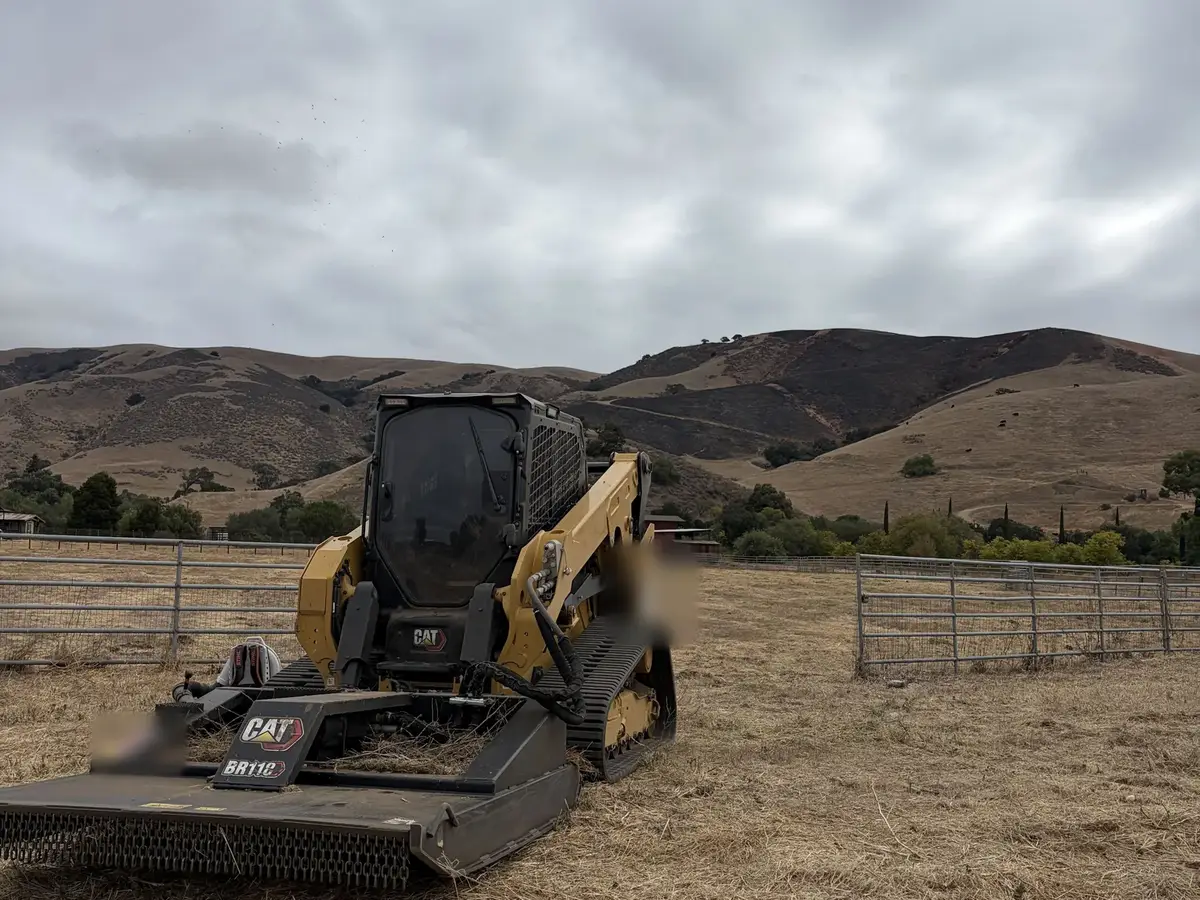
We handle brush clearing on the Monterey Peninsula with a compact track loader. It runs a masticating head and a rotary brush mower. The brush is ground into mulch where it stands, and the trees stay standing. Goat grazing is a separate service; our work is the masticator and the mower.
What does each method clear best?
Goats eat brush. The UC ANR Fire Network says goats are effective at consuming brush and many weeds. They are also more effective on very steep slopes than sheep or cattle. Grazing can reduce live fine fuels and ladder fuels, but it does not remove dead woody fuels.
Goats also eat plants people avoid. UC’s pest note on poison oak says grazing by sheep and goats can be effective in small areas. The California Invasive Plant Council says French broom is unpalatable to most livestock except goats. UC’s fire network lists Himalayan blackberries among the weeds targeted grazing can impact.
Mowing is for grass and weeds. Brush mowing with a rotary cutter takes down tall grass, weeds and light brush on fields, lots and road frontage. The UC pest note says mowing does not control poison oak well and can release its oil into the air.
Mastication handles the woody layer. Forestry mulching with a masticating head grinds brush, saplings and small trees into mulch where they stand. Larger trees and limbing are a tree service’s work.
How do goats, mowing and mastication compare?
| Goat grazing | Mowing | Mastication | |
|---|---|---|---|
| What it handles | Leafy brush, poison oak, blackberry, broom and weeds | Grass, weeds and light brush on open ground | Brush, saplings and small trees |
| Speed | About a month per acre with four to eight goats | Fast on open, flat ground | 1 to 3 acres a day for a skid steer mulcher |
| What is left behind | Grazed plants; dead wood stays | Cut grass and weeds on the ground | A mulch layer, with kept trees standing |
| Slopes and access | Very steep slopes, inside a fence, with water on site | Open, flat ground costs least; slopes and obstacles take more time | Where a tracked machine can go; steep, rocky or soft ground can call for different equipment |
| Timing against a notice deadline | Start date and length are estimates that can shift | Quick once the mower is on site | One pass grinds the brush in place |
| Repeat visits | Brush resprouts; graze again or use other tools later | Grass grows back each season | Poison oak and broom resprout; plan follow-up passes |
The speed figures come from national cost guides.
What do goats need before they can start?
Goat grazing services bring their own setup. UC’s fire network says they typically provide the livestock, fencing, staff, watering equipment and predator protection. One national cost guide says a goat wrangler can put up a portable electric perimeter to contain the herd.
Water and terrain shape the price. UC notes that a site without livestock water may need water hauled in. Steep or hard-to-reach ground takes more labor and typically costs more.
Goats also eat what they can reach. The same national guide says goats have been known to pull down branches, rip up shrubs and dismantle saplings. It suggests tarping off areas you want them to stay out of.
Which method fits a notice deadline?
Defensible space and weed abatement notices usually come with a date. Goats can work toward it, but the timing is softer. UC’s fire network says grazing services estimate a start date and duration. Those estimates can shift with how much vegetation grew that year.
Mowing is the quick fit for grass. From 30 to 100 feet out, California’s defensible space regulations call for annual grasses cut to 4 inches or less. On open ground, a brush mower gets a lot to that height fast. Our guide to what a weed abatement notice asks for covers local heights and dates.
Mastication fits a deadline when the problem is brush. The masticating head grinds brush, saplings and small trees into mulch in one pass. One national cost guide says a skid steer mulcher can mulch 1 to 3 acres a day.
Will brush grow back after goats, mowing or mastication?
Some of it will, whatever the method. UC’s fire network says many brush species resprout after grazing and need repeat grazing or other tools in later years. It adds that in most cases, a single grazing treatment will not clear out fuels the way mechanical removal will.
Poison oak and French broom both come back from the roots. The California Invasive Plant Council says broom can resprout from its root crown if cut or grazed. The UC pest note says cutting poison oak near the base gives poor control unless repeated through the season. Plan on follow-up passes for both.
Burning is not a shortcut. The UC pest note says to avoid burning poison oak. It creates a serious health hazard and does not effectively reduce infestations. Our Monterey County burn permit guide covers the burn rules.
What do goat grazing, mowing and mastication cost?
These are market numbers from national cost guides, not our price list. One national cost guide puts goat rental at $400 to $1,000 per acre. Delivery fees can add $100 or more.
Another national guide lists commercial mowing at $50 to $150 per acre under 5 acres. On 5 acres or more, it lists $25 to $60 per acre. Those rates assume flat ground without obstacles.
The same publisher puts forestry mulching at $400 to $800 per acre on average. Dense overgrowth runs up to $2,000 per acre. By the hour, mulching runs $125 to $300, with minimum fees of $400 to $600.
Grazing is not always the low-cost pick. UC’s fire network says targeted grazing may not be the least costly option, especially compared to mowing. It can be more cost effective on ground too steep, rocky or remote for mowing. Multi-year grazing contracts are typically cheaper per acre.
Can you combine grazing with mowing or mastication?
Yes, and public agencies do. UC’s fire network describes grazing that opens the lower brush canopy first, so mechanical removal can follow. One national cost guide lists common steps after forestry mulching. Two of them are mowing the regrowth and moving livestock in to graze it.
Local fire plans mix them too. The 2023 wildfire protection plan for Monterey, Carmel-by-the-Sea and Pacific Grove names one example. It lists a CAL FIRE goat grazing and mastication program at Jacks Peak. The state’s Minimum Fire Safe Regulations list prescribed herbivory (grazing) and mechanical treatment among the treatment options for fuel breaks.
Which one fits your property?
Match the tool to what grows there. Goats suit a small, steep, fenced patch of poison oak or blackberry. Mowing suits an open lot or field of grass and weeds with a deadline. Mastication suits brush, saplings and small trees.
We are based in Seaside on the Monterey Peninsula. We work across the Salinas area and up the coast to Santa Cruz. We look at the property, or you send photos, and put the quote in writing. Read how our brush clearing works, or call or text (831) 200-5377.