
Forestry Mulching
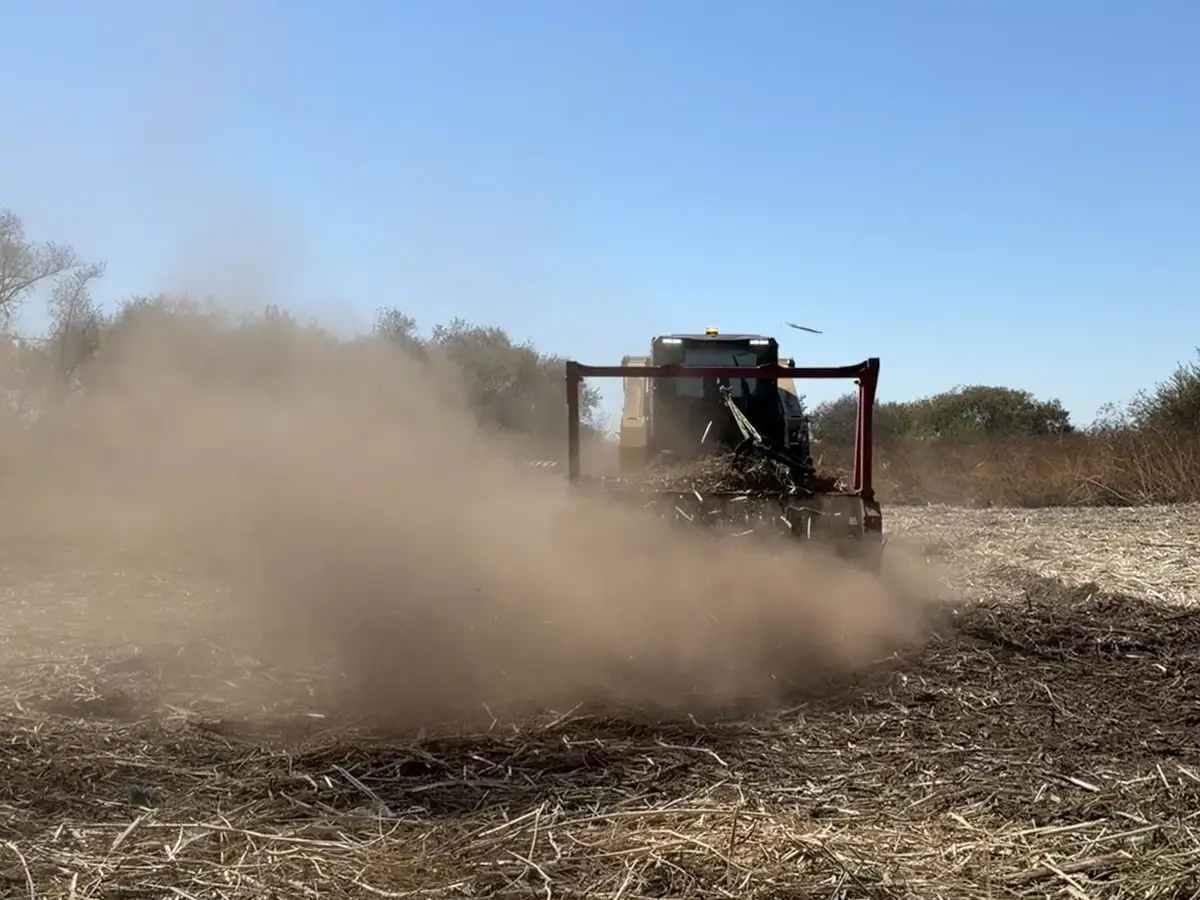
Our masticating head grinds brush and small trees into mulch where they stand. The ground is left under a mulch layer, and the trees you keep stay standing.
Learn More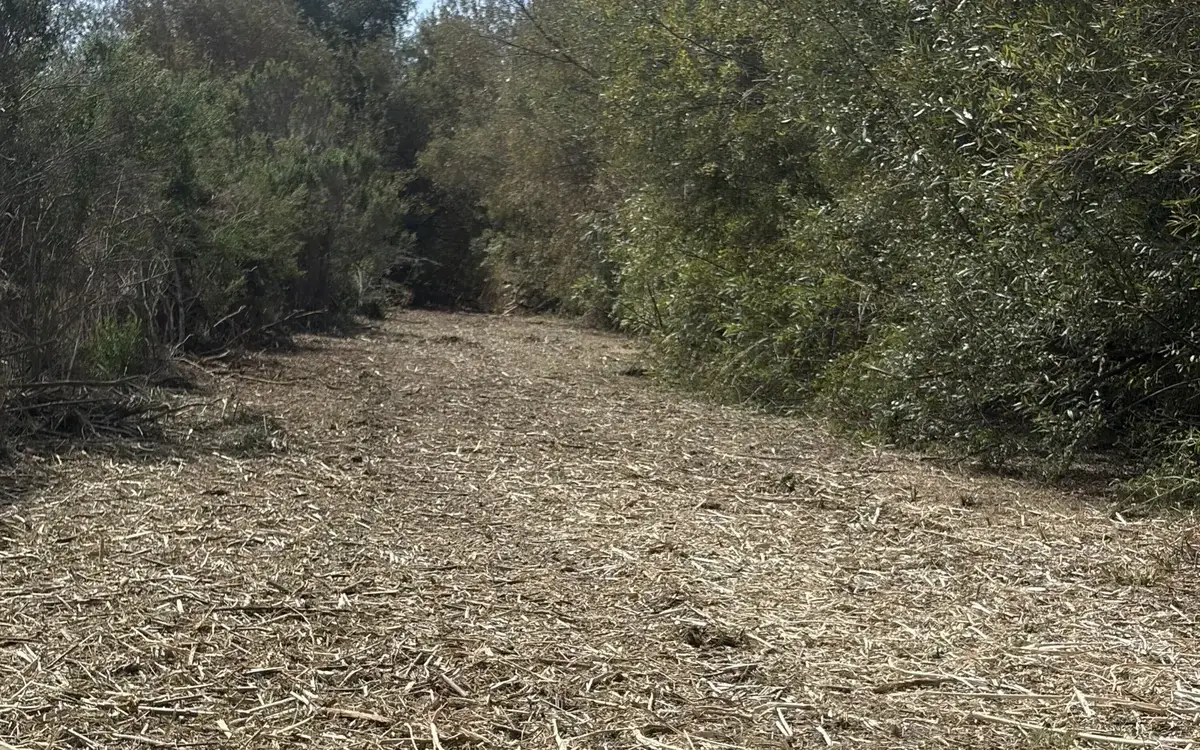
What is a fire break? A fire break is a strip of land where the brush and grass are cleared or cut low. A fire that reaches it has less to burn, and fire crews get a place to work. We cut fire breaks and fuel breaks on ranch land and along property lines, ridges, roads and driveways.
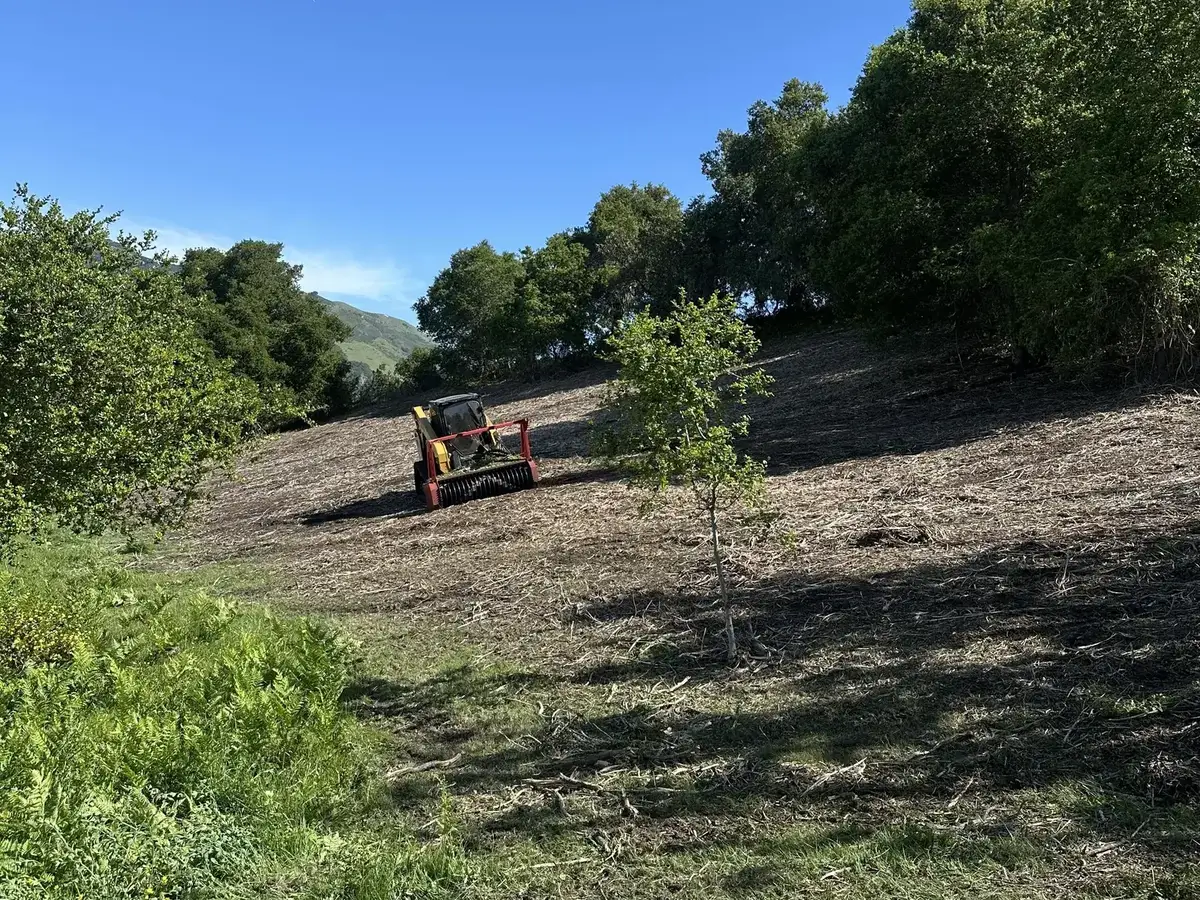
Cruz Land Management is based in Seaside and works from the Monterey Peninsula up the coast to Santa Cruz. We cut breaks with a compact track loader fitted with a masticating head or a rotary brush mower. Brush is ground into mulch where it stands, and grass is mowed low. A break works on the wider land, past the defensible space around your house.
Tell us about the brush, the lot or the letter you got. We look at the property and put the quote in writing.
The two terms get mixed up, but fire agencies use them differently. Monterey County's Community Wildfire Protection Plan describes a firebreak as bare ground with no vegetation. It runs at least 10 feet wide and often 20 to 30 feet. A fuel break keeps some plants, thinned so a fire burning into it is easier to control.
The state Board of Forestry and Fire Protection defines a fuel break by its job. Its plants are managed to limit how hot and fast a fire burns. What we cut is a fuel break, with brush ground into mulch and grass mowed low. Scraping a line to bare dirt takes a dozer or a disc, which is another trade's work.
A shaded fuel break keeps the larger, healthy trees and their shade. The brush and small trees under them come out, so a ground fire has less fuel to climb. The shade also tends to slow the regrowth of grass and brush.
Where a break goes depends on how a fire would move and how people would get out. The Board's rules for new development list roadsides and ridgelines as places for fuel breaks. CAL FIRE's own guidance ties breaks into roads and other ground with little fuel.
The masticating head grinds brush, saplings and small trees into mulch where they stand. The rotary brush mower cuts grass and light brush low. CAL FIRE's fuel break standards list both mowing and masticating among the usual treatments. The larger trees stay standing over a layer of mulch, and limbing them up is a tree service's work.
A break beside a driveway or a private road opens up the way in and out. CAL FIRE notes that breaks along roads and driveways can help people evacuate and let fire crews in. We cut perimeter breaks for HOAs and property managers too.
Fuel breaks are part of fire planning on both sides of Monterey Bay. Monterey County's plan lists breaks near Jacks Peak and on Carmel Valley ridges. The plan also calls for keeping up the fuel break system on the old Fort Ord ground. The Resource Conservation District of Monterey County won a CAL FIRE grant for strategic fuel breaks across Carmel Valley.
In 2019, CAL FIRE named a shaded fuel break above Aptos one of its 35 priority projects statewide. The project follows ridgetop roads in the Santa Cruz Mountains, with a section on Buzzard Lagoon Road. After the 2020 CZU Lightning Complex, land managers north of Santa Cruz planned a network of new fire breaks.
Those fuel reduction projects belong to the agencies and landowners who planned them. A break on private land can line up with the same roads and ridges. We cut private breaks from the Carmel Valley to the Pajaro Valley hills, with upkeep each season.
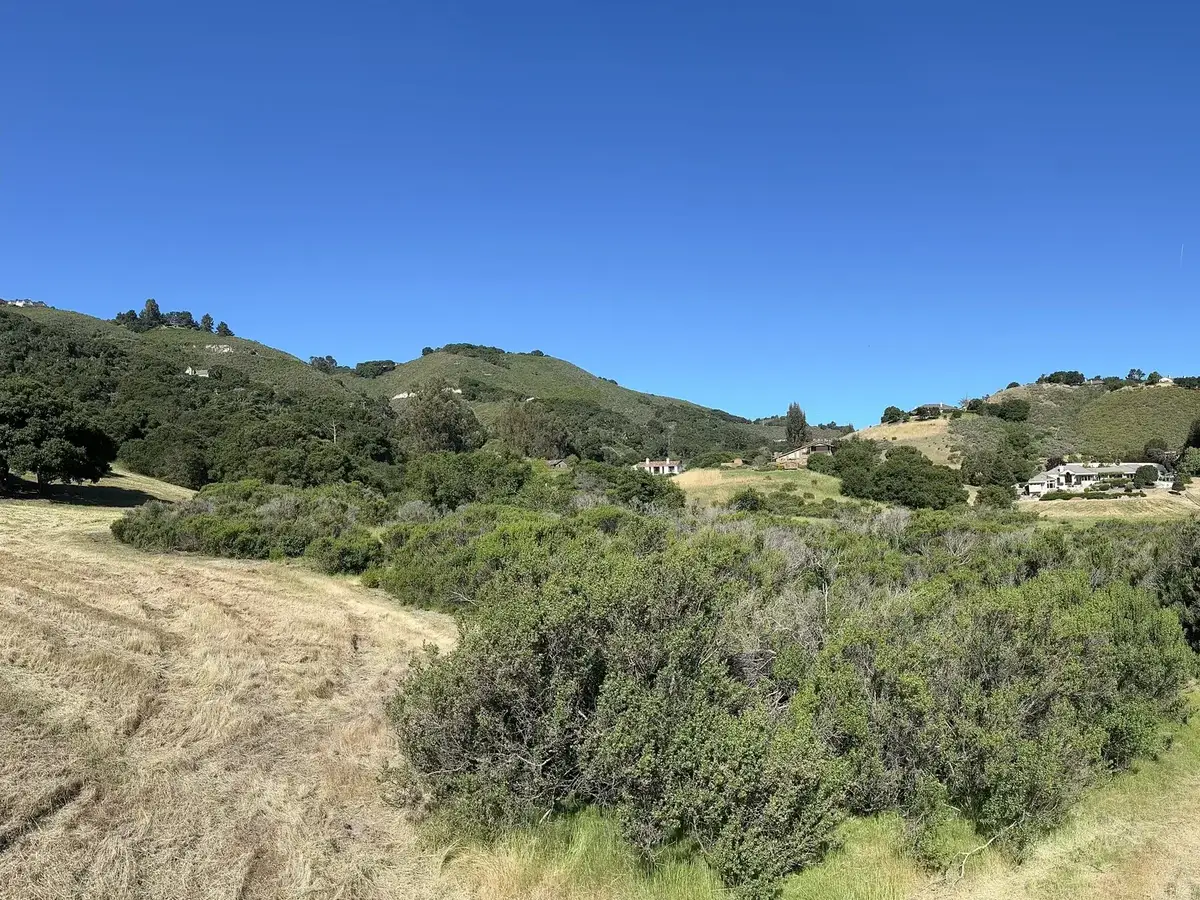
Call or text for a written quote anywhere across the Monterey Peninsula, the Salinas area and up the coast to Santa Cruz.
(831) 200-5377From the first call or text to cleared ground, here is how it goes.
Call or text (831) 200-5377 and tell us about the property. Send photos if you like, plus any notice or insurance letter.
We look at the brush, the grass, the slopes and how the machine gets in. Good photos can stand in for a visit.
You get the quote in writing. If a notice or an insurance letter is in hand, the work is sized to it.
The masticating head grinds the brush, saplings and small trees into mulch. The brush mower cuts the grass and weeds down.
You get mulched and mowed ground, with the trees you kept still standing. We take a final look at it with you.
Common questions about fire breaks across the Monterey Peninsula, the Salinas area and up the coast to Santa Cruz. If yours is not here, call or text and ask.
Our masticating head grinds brush and small trees into mulch where they stand. The ground is left under a mulch layer, and the trees you keep stay standing.
Learn More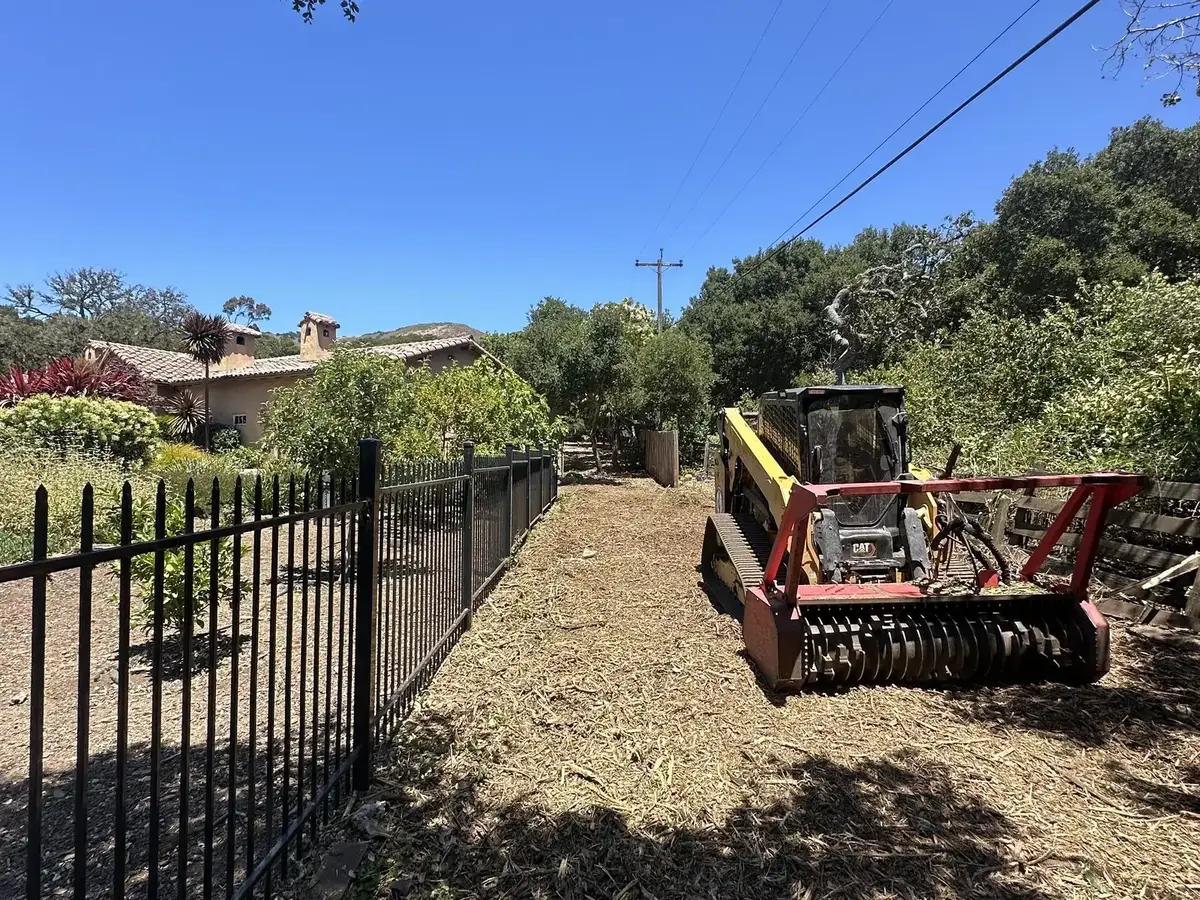
We clear overgrown brush and poison oak off hillsides and fence lines. The masticating head grinds it into mulch where it stands, and the trees stay.
Learn More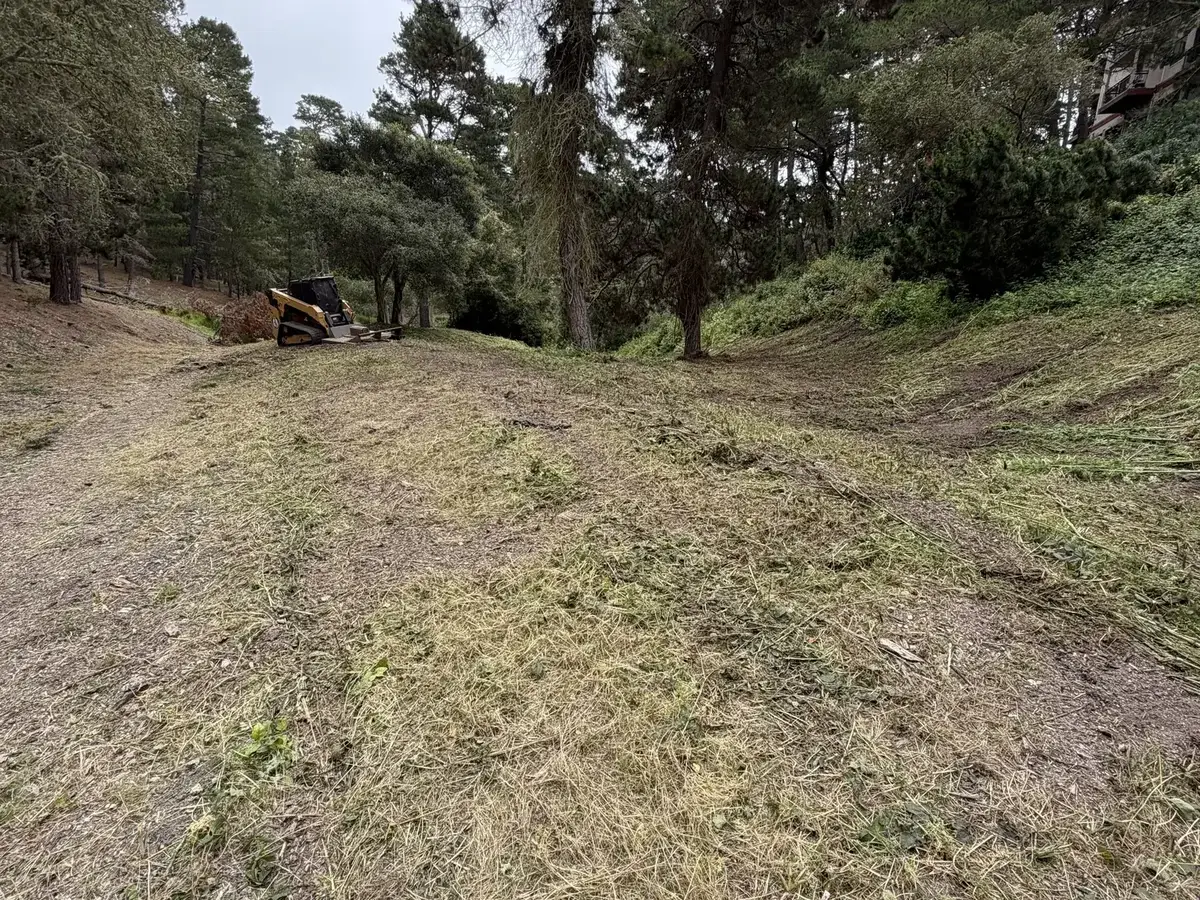
We run seasonal vegetation management programs for HOAs, property managers, commercial properties and ranches. Grass is mowed and brush is masticated on a schedule built around notices and fire season.
Learn MoreThe compact track loader runs a masticating head for brush and a brush mower for grass and weeds. Each part of the property gets the attachment that fits it.
Brush, saplings and small trees are ground into mulch where they stand, and the trees you want stay standing. The mulch stays on top as cover, and the soil stays in place.
We look at the brush, the slope and the access first, or work from your photos. The quote comes to you in writing before any work starts.
We are based in Seaside on the Monterey Peninsula, between Monterey and Marina. The work reaches across the Peninsula, the Salinas area and up the coast to Santa Cruz.
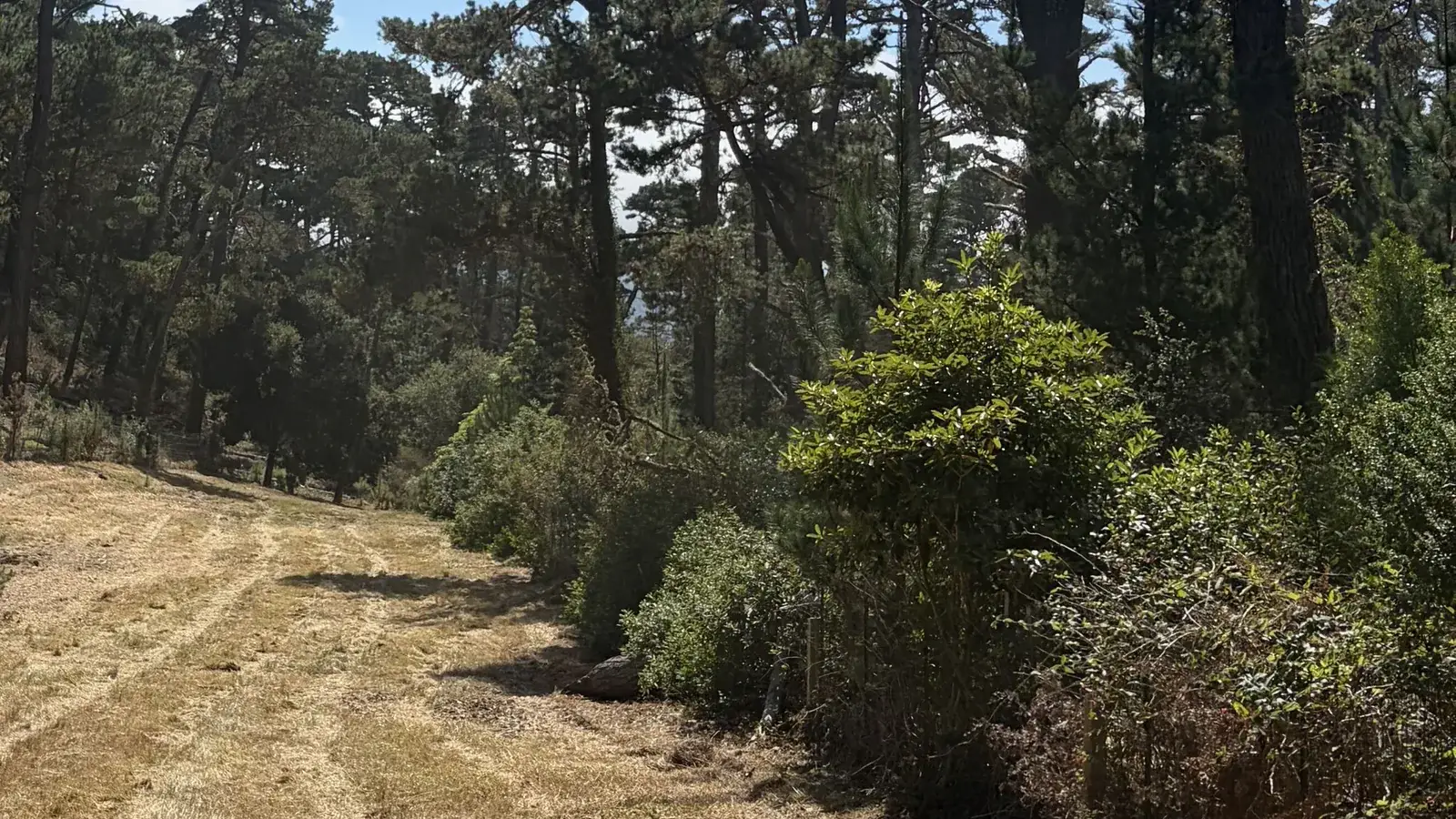
California defensible space rules for 2026: the 100 feet, Zones 1 and 2, where Zone 0 stands, inspections and insurance on the Monterey Peninsula.
Read more →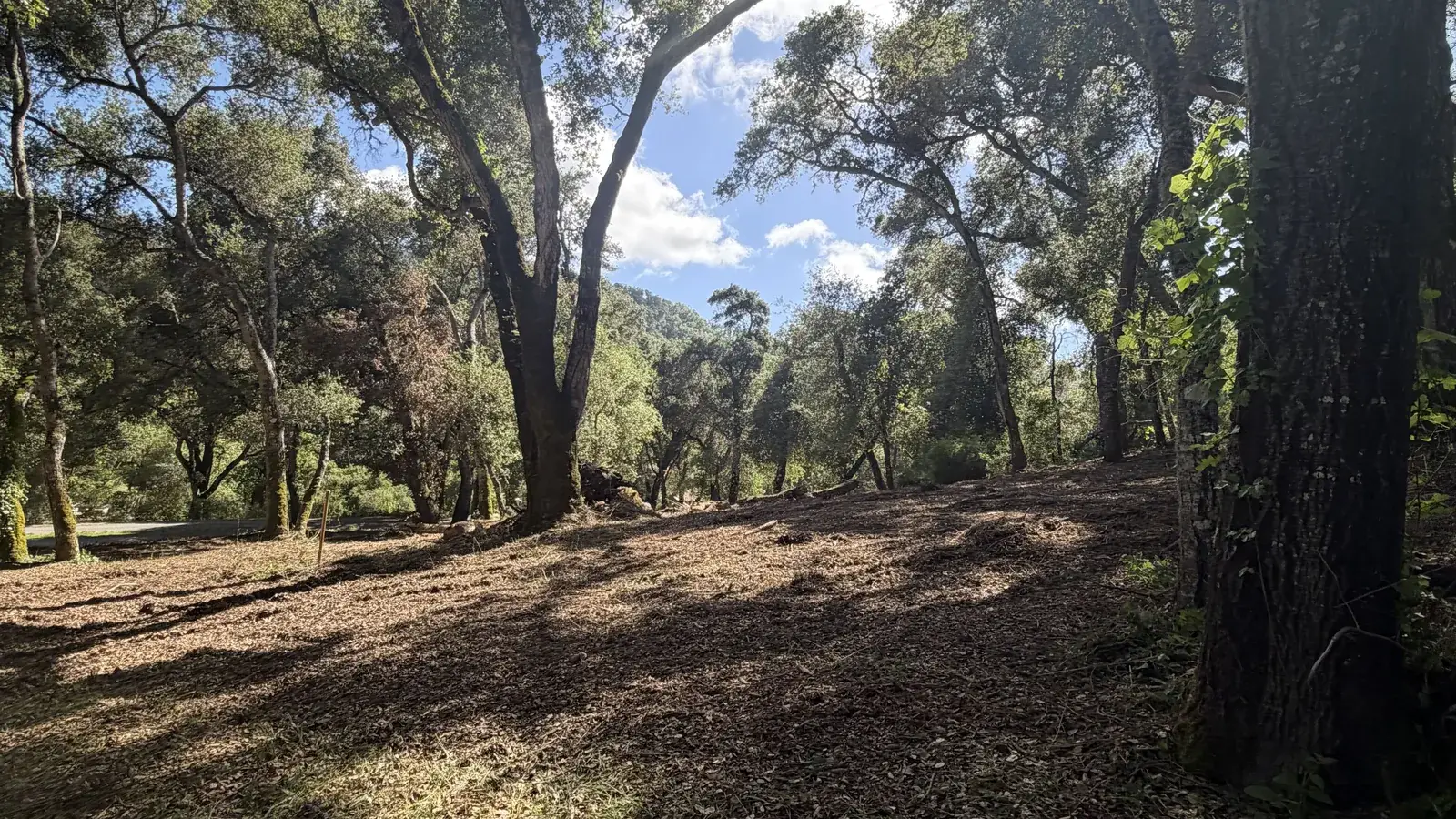
Land clearing runs about $1,200 to $8,000 an acre in one national guide. See what chaparral, oaks, hillsides and county permits add in California.
Read more →Tell us where the property is and what needs clearing, and send photos if you have them. Call or text (831) 200-5377, or use the form, and we will get back to you.
Tell us about the brush, the lot or the letter you got. We look at the property and put the quote in writing.